Industrial Hand Washing Station: A Buyer's Guide for Food, Pharma and Manufacturing Units
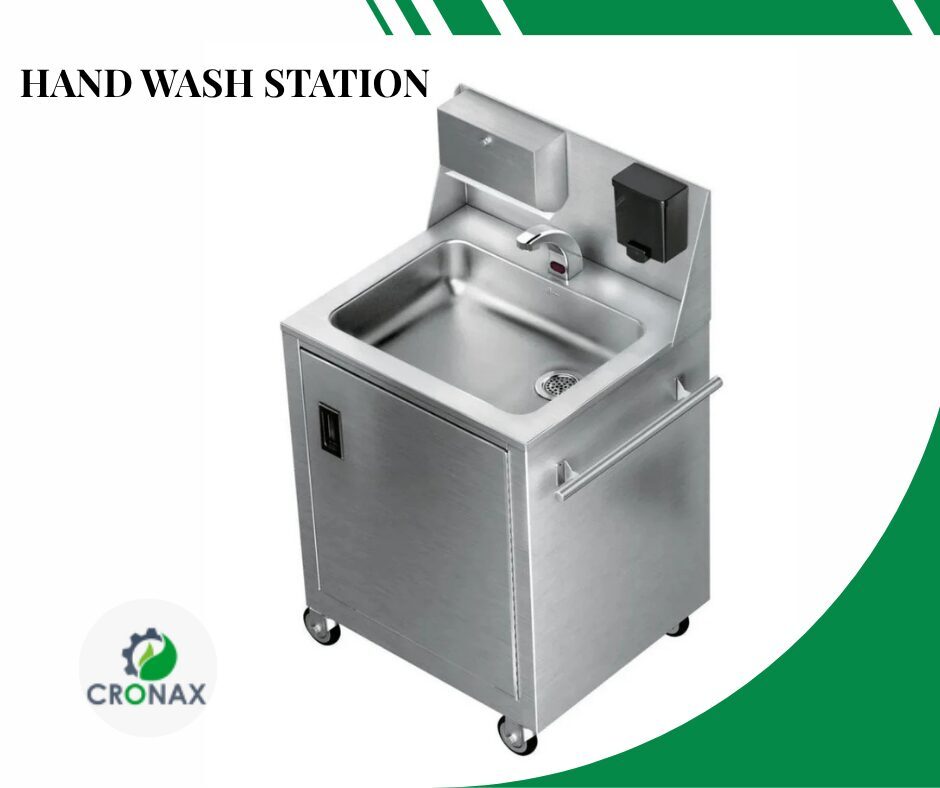
An industrial hand washing station is a purpose built unit that gives every person on your floor a quick, reliable way to wash their hands before they work. Unlike a basin in a restroom, it sits where the work happens: at the entry to a production area, a packing hall or a cleanroom gallery. This buyer's guide from Cronax Industries explains what to look for, so you choose a unit that fits your facility and keeps being used.
What Is an Industrial Hand Washing Station?
It is a stand alone or wall fitted unit with a wash basin, a tap, a soap supply and a way to dry or sanitise hands. It is built from tough, easy to clean material and designed for heavy daily use by many people. Most units are made so that hands touch as few surfaces as possible, because a tap handle that everyone grips can spread what you are trying to remove.
Where It Is Used
Any workplace where hands can affect the product or the people benefits from one.
- Food processing units place them at the entrance to the production floor.
- Pharmaceutical plants and cleanroom facilities use them in the gowning path before the controlled area.
- Manufacturing and assembly units use them where clean hands protect sensitive parts, such as electronics.
- Packing and storage areas use them so handlers wash before touching finished goods.
Cronax Industries lists a Hygiene Station among its offerings. Ask the team which configurations are available for your use case.
Why It Matters
Better hygiene. A wash point at the doorway makes washing the easy choice, not a walk to a distant restroom.
Contamination control. Clean hands reduce what is carried onto product, packaging and surfaces. That protects both your goods and your customers.
Good compliance habits. When washing is quick and visible, it becomes a routine that supervisors can check and auditors can see. A station placed in the natural walking path builds the habit better than any notice on the wall.
How to Choose the Right One
Start with how your people work, then match the features.
Hands free operation. Look for foot operated or sensor operated taps. They keep hands off shared handles, which is the main point of the unit. Sensor units need a power or battery supply, and foot units need floor space for the pedal, so check which suits your layout.
Material. Stainless steel is the common choice for wet, cleaned every day areas because it wipes down easily. Confirm the grade and finish with the supplier for your environment.
Size and number of users. A unit for a small packing room is not the unit for a shift change of fifty people. Count how many people pass the station at the busiest time, and ask about multi user units with more than one tap.
Soap and sanitiser. Decide whether you need a soap dispenser, a sanitiser dispenser or both, and how they are refilled. A dispenser that is hard to refill is often left empty.
Drain and water supply. The unit needs water in and a drain out. Check where your pipes and floor drains are before you pick a position, because moving them later costs time and money.
Ease of cleaning. Smooth surfaces, few corners and no hidden gaps make daily cleaning fast. If a unit is hard to clean, it will not be cleaned well.
Siting. Place it where people must pass it, with enough room that a queue does not block the doorway.
Installation and Care
Plan the position first, then arrange the water and drain connections to match. Fix the unit level and firm so it does not move under daily use. Run it once before it goes live to check flow, drainage and dispensers.
Care is simple. Wipe the basin and surfaces every day, refill soap and sanitiser before they run out, and check sensors and pedals for wear. Report a leaking or blocked unit at once, since a station that does not work is a station nobody uses.
Common Questions
What is the difference between an industrial hand washing station and a normal wash basin? A normal basin is built for occasional use. An industrial station is built for heavy, repeated use, usually with hands free operation, tough materials and a design that is easy to clean.
Should I choose foot operated or sensor operated taps? Both keep hands off the tap. Foot operation needs no power. Sensor operation needs a supply but is easy to use. Pick the one that fits your space and your maintenance routine.
How many hand washing stations does my unit need? It depends on how many people enter at a time and how the floor is laid out. Share your headcount and entry points with the supplier and let them advise.
Request a Quote
If you are planning an industrial hand washing station for a food processing unit, pharma plant, factory or cleanroom, Cronax Industries can help you pick the right setup. Tell us how many people use the area, your space and your water and drain points, and request a quote to get started.