Why Is Your AHU Not Maintaining the Required Room Temperature?
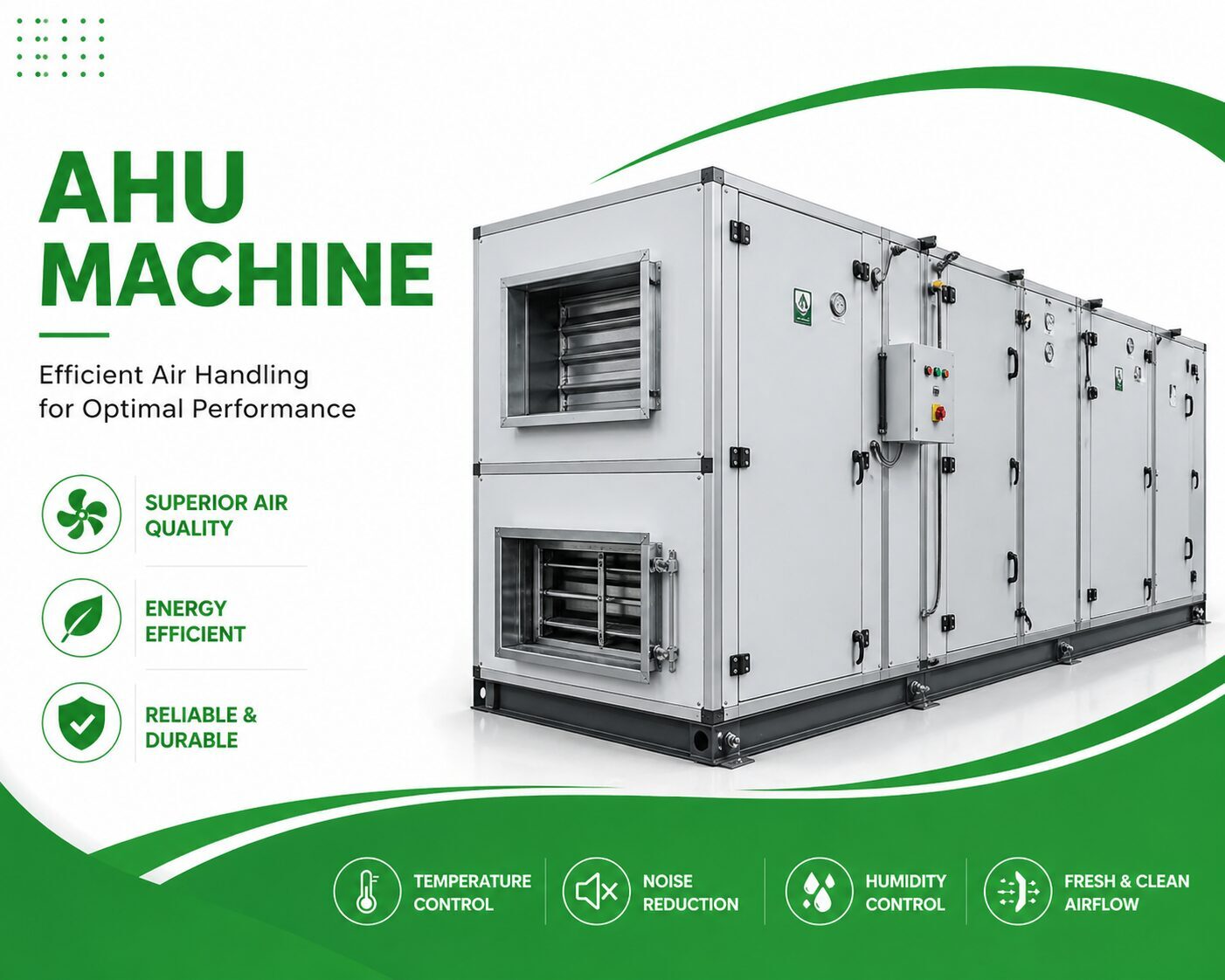
Your AHU is running, but the room still feels too warm or too cold. Frustrating, right? An air handling unit that can’t hold the set temperature usually has a simple cause behind it, like dirty filters, weak airflow, or a faulty sensor. Let’s look at the most common reasons and how to fix them.
You set the temperature, but the room never gets there. Some areas feel warm, others feel cold, and the readings keep changing. If this sounds familiar, your air handling unit (AHU) may be struggling.
The good news is that most AHU temperature problems have simple causes. Let's walk through them in plain language.
What Does an Air Handling Unit Do?
An air handling unit is the part of an HVAC system that treats and moves air through a building. It pulls in air, cleans it through filters, cools or heats it with a coil, and pushes it into rooms through ducts.
In hospitals, pharma plants, cleanrooms, offices, and factories, the AHU also helps control humidity and air quality. So when it fails to hold temperature, the whole space is affected.
Common Reasons Your AHU Is Not Holding Temperature
1. Dirty or Clogged Filters
This is the most common cause. Dust blocks airflow, so less cool air reaches the room. The fan works harder, but the result is weaker cooling.
What to do: Check filters regularly and replace or clean them on schedule.
2. Dirty Cooling Coil
Dust and grime on the coil act like a blanket. They stop heat from transferring properly, so the air does not cool as it should.
What to do: Clean the coil during routine maintenance.
3. Low Chilled Water or Refrigerant Flow
If the coil does not get enough chilled water or refrigerant, cooling drops. Causes can include a weak pump, air in the pipes, or a partly closed valve.
What to do: Check water temperature, flow rate, and valve position.
4. Faulty Control Valve or Actuator
The control valve decides how much chilled water enters the coil. If it sticks or fails, the AHU cannot adjust to demand.
What to do: Test the valve and actuator, and replace if they do not respond correctly.
5. Wrong Sensor Readings
Sensors tell the system what is happening in the room. If a sensor is dirty, misplaced, or out of calibration, the AHU reacts to wrong data.
What to do: Calibrate or replace temperature and humidity sensors.
6. Fan or Belt Problems
A slipping belt, worn bearing, or weak motor reduces airflow. Less air means less cooling in the room.
What to do: Inspect the belt tension, motor, and fan speed.
7. Duct Leakage or Poor Balancing
Leaks in ducts waste cool air before it reaches the room. Poor balancing sends too much air to one area and too little to another.
What to do: Seal leaks and have the airflow balanced by a professional.
8. Damper Issues
Stuck or wrongly set dampers can let in too much hot outside air or block the supply of cool air.
What to do: Check that dampers open and close smoothly and are set correctly.
Other Factors That Can Cause Trouble
Sometimes the AHU itself is fine, but the conditions around it are not. Look at these too:
- Higher heat load: More people, machines, or lighting than the system was designed for
- Poor insulation: Heat entering through walls, roofs, or doors
- Open doors: Warm air flowing in and cool air flowing out
- Wrong set points: Control settings that do not match the room's needs
- Undersized unit: An AHU that is too small for the space
Quick Troubleshooting Checklist
When the room is not reaching the set temperature, check these first:
- Are the filters clean?
- Is the coil clean and free from dust?
- Is chilled water or refrigerant flow normal?
- Are valves and dampers working properly?
- Are the sensors showing correct values?
- Is the fan running at the right speed?
- Are doors and openings kept closed?
Many problems are found within the first few steps.
How Regular Maintenance Prevents Problems
Most AHU failures build up slowly. Regular care keeps the unit steady and saves money.
- Clean or replace filters on time
- Clean coils and drain pans
- Check belts, bearings, and motors
- Test sensors and controls
- Inspect dampers and ducts
- Keep a simple maintenance log
A planned schedule is far cheaper than an emergency breakdown.
When to Call an Expert
If you have checked the basics and the room still will not hold temperature, the issue may be deeper. It could be a design mismatch, a control fault, or a worn-out component.
A trusted manufacturer like Cronax Industries can inspect your system, find the root cause, and suggest the right fix. That might be a repair, a control upgrade, or a better-sized unit.
Why the Right AHU Design Matters
An AHU should match the room's size, heat load, and purpose. A unit made for an office will not suit a pharma or cleanroom space.
Cronax Industries builds air handling units for different needs, with options to adjust size, filtration, and controls to suit your project. A well-designed unit holds temperature better and wastes less energy.
Final Thoughts
When an AHU fails to maintain room temperature, the cause is usually simple: dirty filters, weak flow, faulty sensors, or poor balance. Start with the basics, keep up regular maintenance, and call an expert when needed.
A healthy air handling unit means steady comfort, better air quality, and lower energy bills.
Talk to Cronax Industries today. Share your room details and the problem you are facing, and get expert advice on fixing or upgrading your air handling unit.