Industrial Hand Washing Station
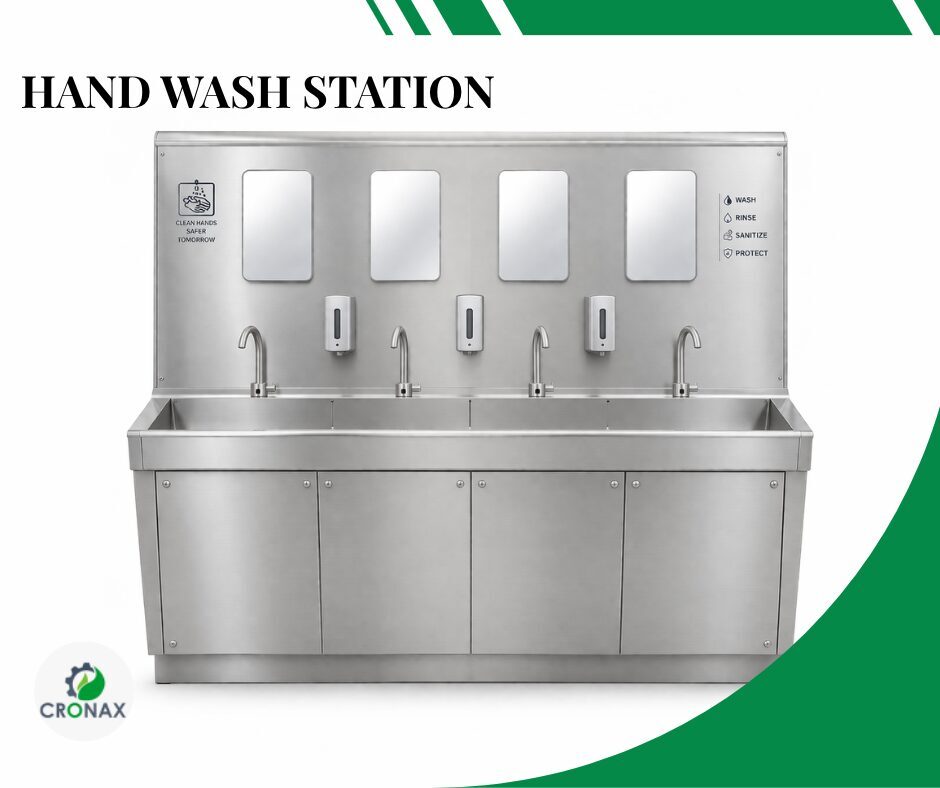
In a food plant, a pharma unit or a busy workshop, hand washing is not a personal habit. It is part of the process. One worker with unwashed hands can contaminate a whole batch, and the loss can be far bigger than the cost of the equipment that would have prevented it. An industrial hand washing station is a purpose-built sink unit, usually in stainless steel, placed where people enter or move between work areas so hands get cleaned properly every time.
A normal wash basin in a washroom is not enough for this job. It is slow, it has handles that dirty hands touch, and it is often far from where people actually work. An industrial station fixes these problems.
What Makes It Different From a Normal Wash Basin
A regular basin is made for occasional use. An industrial hand washing station is made for hundreds of washes a day, in wet and harsh conditions, with strict hygiene rules. The main differences are:
- Hands-free operation: sensor taps, knee-operated levers or foot pedals mean clean hands never touch a dirty handle
- Stainless steel body: does not rust, does not absorb dirt and can be washed down daily
- Deeper, larger basin: reduces splashing and handles more users
- Built-in soap and sanitiser dispensers: so no one has to look for them
- Proper drainage: water goes away fast and does not pool on the floor
Where It Is Used
Food and beverage plants, dairies, bakeries, meat and poultry units, pharma factories, hospitals, labs, commercial kitchens, cold storage, cosmetics units and electronics factories all use these stations. In general, if the product or the patient can be harmed by dirty hands, a station should be at the entry or between work zones.
Types of Industrial Hand Washing Stations
Single-user station. One basin, one tap. Good for small kitchens, labs or side entries.
Multi-user station. A long trough or several basins in a row, so a group can wash at the same time. Suits large plants where many workers enter together at shift change.
Wall-mounted unit. Saves floor space and is easy to clean below. Works where the room is tight.
Free-standing unit. Does not need a wall, so it can be placed in the middle of a corridor or workspace.
Station with sole cleaner. Combines hand washing with boot or shoe cleaning, so both are done in one stop.
Station with turnstile. The gate opens only after the wash cycle is done, which makes the process hard to skip.
Mobile or portable station. Has its own water tank, so it can be used where there is no plumbing, such as outdoor areas, construction sites or temporary setups.
Features Worth Checking Before You Buy
Stainless steel grade. SS 304 is fine for most food and general industry. SS 316 suits pharma, coastal sites or places where strong chemicals are used.
Tap type. Sensor taps are the most hygienic. Check that the sensor does not trigger by mistake and that the water flow and temperature are comfortable.
Basin size and depth. A shallow basin splashes water on the floor and on clothing. Choose a depth that suits the number of users.
Welding and finish. Smooth welds and rounded corners stop dirt from collecting. Avoid units with exposed screws or sharp edges.
Dispensers. Touch-free soap and sanitiser dispensers should be easy to refill and positioned within a short reach of the basin.
Drying option. Hand dryers or paper towel holders are important. Wet hands carry germs more easily than dry ones.
Water saving. Some models control flow time, which cuts water use without hurting hygiene.
Size for your headcount. One wash point can serve roughly 15 to 20 people during a rush. Plan more points for large shifts.
Why Hand Wash Station Helps Your Business
A good Hand Wash Station gives you a steady, repeatable hygiene routine that does not depend on reminders. It reduces contamination risk, protects shelf life and quality, and makes it easier to meet food safety and GMP audits. Workers also use it more when it is clean, easy and close by. A station placed in the wrong place, or one that is awkward to use, will be skipped. That is why location matters as much as the equipment itself.
Where to Place It
Put the station at the point of entry to the production area, after the changing room and before the work floor. Add another near restrooms and break areas, so people clean up on the way back. Leave space to queue, and make sure there is a drain connection nearby. Keep it a little away from open product, since the wash area is wet.
How to Wash Hands Properly at the Station
Even the best Hand Wash Station fails if people rush. A simple routine to display on a sign:
- Wet hands with clean water
- Apply soap and rub for at least 20 seconds, including between fingers, thumbs and under nails
- Rinse well
- Dry with a hand dryer or paper towel
- Apply sanitiser if your process needs it
Supervisors should check this now and then, especially in the first few weeks after installation.
Keeping the Station in Good Condition
- Clean the basin and body daily with a food-safe cleaner
- Refill soap and sanitiser before every shift
- Clear the drain filter often, as blocked drains are the most common fault
- Check sensor taps and replace batteries on time
- Descale taps and spouts if your water is hard
- Check seals and connections for leaks every month
- Keep a simple log of cleaning and checks for audits
Common Mistakes to Avoid
The most common one is buying a unit that is too small for the number of workers, so people queue up and start skipping it. Another is choosing a cheap model with thin steel, which dents and rusts. Some sites forget a drying option, which leaves workers wiping their hands on their clothes. And many do not put up clear instructions, so people wash for only a few seconds.
A Practical Example
Take a mid-size bakery with sixty workers per shift. The owner installs one single-basin sink at the entry, and during shift change a line forms. Within a week, half the workers just rinse for a few seconds, or skip it. Replacing it with a four-point multi-user station with sensor taps and a hand dryer fixes the queue, and the staff start washing properly because it no longer takes extra time. The equipment did not change the rules. It made following them easy.
Final Thoughts
An industrial hand washing station is a simple piece of equipment, but it sits at the most important point of your hygiene system. Choosing the right type, size and material, placing it well and keeping it clean makes a real difference to product quality and worker health. Stainless steel units from makers such as Cronax Industries can be made in different lengths and with different tap, dispenser and sole-cleaning options to fit your layout, and the team there can help if you are unsure how many wash points your site needs. For a quotation or product details, you can contact Cronax Industries.